Bathtub vs Shower: How to Choose the Right One

Updated: Aug 12

Tub or shower is one of the first decisions in any bathroom project, and it's rarely just about preference. It touches how much space you need, what the renovation costs, how safe the bathroom is as you age, and how easy your home is to sell. A tub and a shower solve different problems — so the right answer depends on your household, your layout, and how long you plan to stay.
Here's a straight comparison across the things that actually matter, followed by the questions people ask most: which is cheaper, which holds resale value, and whether you really have to choose at all.
Bathtub vs Shower at a Glance
Bathtub | Shower | |
Space needed | More — larger footprint plus clearance (a standard tub is about 60×30–32") | Less — works in tight rooms (from about 32–36" square) |
Water use | More — a full bath usually uses more than a shower | Less, unless you take very long showers |
Accessibility | Harder — stepping over a high wall is a fall risk | Safer — curbless entry is ideal for aging in place |
Install cost | Similar for standard units; freestanding and jetted tubs cost more | Similar for standard; custom tile and glass cost more |
Maintenance | Fewer surfaces, but the tub takes up cleaning time | Glass and grout need regular attention |
Best for | Families with young kids, soaking, resale in family homes | Daily speed, small bathrooms, accessibility |
Space and Layout
Space is usually the deciding factor. Bathtubs need a bigger footprint and clearance around them — a freestanding tub especially, which looks striking but wants room to breathe. Showers adapt to smaller bathrooms, and an enclosed or curbless walk-in shower with glass panels can make a compact room feel open rather than cramped.
For rough planning, common shower base sizes are 32×32, 36×36, 48×32, and 60×32 inches, while standard tubs are typically 60×30 or 60×32 inches. If your bathroom is tight, a shower almost always makes better use of the floor — and if it's a second or basement bathroom, that space saving matters even more.
Installation and Maintenance
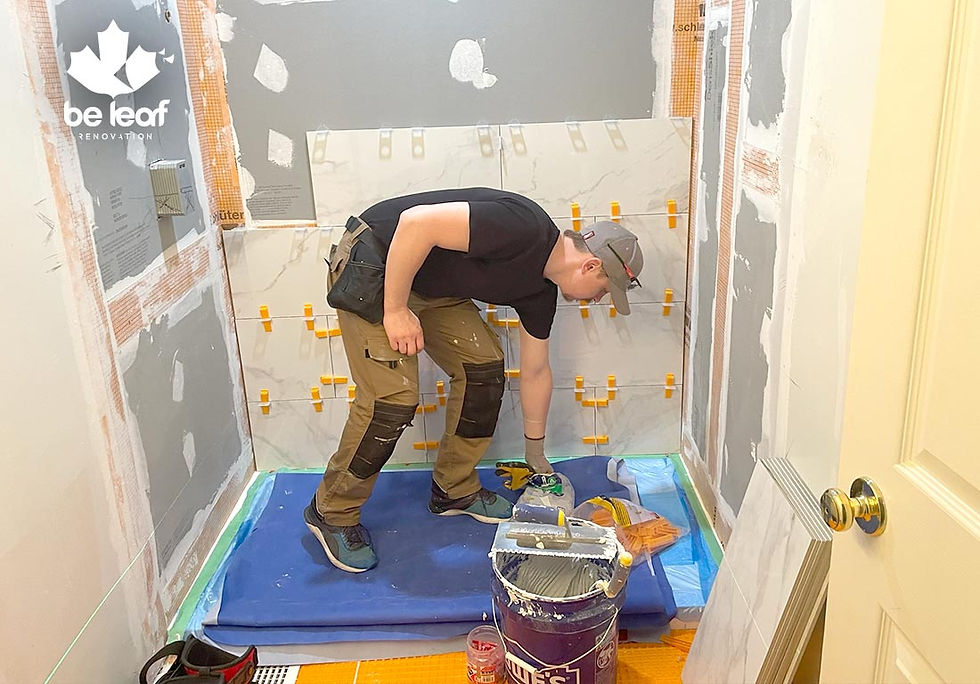
A standard shower is generally quicker to install than a tub, since it doesn't involve moving and setting a large, heavy fixture. Both, though, depend on the same thing being done right: the plumbing and, for a tiled shower, the waterproofing behind the walls and under the floor. Before any tile goes down, the supply and drain lines should be checked and the base water-tested — skipping that is what causes leaks and mould later.

Maintenance is roughly even. A tub has fewer surfaces but occupies scrubbing time; a shower is quick to wipe but glass and grout need regular care. Neither is "no maintenance" — the real difference is the accessibility and space trade-off, not the cleaning.
Accessibility and Aging in Place
This is the factor most people underweight until it matters. Stepping over a tub wall is one of the most common causes of bathroom falls for older adults, which is why so many Ottawa homeowners eventually convert. A curbless, no-threshold shower with a bench, grab bars, and slip-resistant tile is dramatically safer, and it can be built to look nothing like a hospital.
Planning to stay in your home long-term? A walk-in shower with a curbless entry is the single best accessibility upgrade in a bathroom. If you're replacing a tub you rarely use, a tub-to-shower conversion reuses the existing footprint and is usually done in 1–2 days.

Resale Value: Should You Keep a Tub?
Here the advice from real-estate professionals is consistent, and worth following: keep at least one bathtub in the home. Buyers with young children actively look for a tub, and a house with no tub at all can narrow your pool of buyers when you sell. That first tub protects your resale.
Beyond that, the trend runs the other way. Most bathroom renovations now prioritize the shower, and in a primary ensuite a large, modern walk-in shower is often more appealing than a tub nobody uses. The practical rule: keep one tub somewhere in the house — often the main or family bathroom — and make the ensuite or secondary bathrooms shower-focused.
Have more than one bathroom? Keep a tub in the family bathroom and go shower-only in the ensuite. That gives you resale protection and a spa-style shower at the same time — the best of both.

You Might Not Have to Choose: The Shower-Tub Combo
If you only have one bathroom, or one bathroom's worth of space, a shower-over-tub combo puts both in a single footprint. You keep the tub for kids and soaking, and the shower for everyday speed. It's the practical compromise for a single-bathroom home, and it's why so many houses are built with one to begin with. A custom shower can also be designed around an existing alcove tub so the two work as one clean, well-sealed unit.
Which Is Better for Relaxation?

Honestly, this one is personal. A bath lets you soak and unwind, and options like a deep-soaker or a jetted tub lean into that. A shower is quicker and more invigorating, and a rain head or a bench turns it into its own kind of retreat. If a long soak at the end of the day is something you'll genuinely use, a tub earns its space. If you can't remember the last bath you took, that space is better spent on a bigger, better shower.

Not sure which fits your room? A 3D design lets you see a tub, a shower, or a combo in your actual bathroom before committing — and if the whole room is dated, it's usually done as part of a full bathroom renovation.

Cost: Which Is Cheaper?

For standard fixtures, the installed cost of a basic tub and a basic shower is roughly similar. The price gap opens up with the choices you make on top:
Tubs — a basic acrylic or fibreglass tub is affordable; freestanding, cast-iron, or jetted tubs cost considerably more.
Showers — a preformed acrylic base is the budget option; custom tile, frameless glass, curbless bases, and niches or benches push the number up.
What really drives cost is the same for both: plumbing changes, layout changes, and finish level. Moving drains or supply lines, and premium tile or fixtures, matter more to the final number than the tub-versus-shower question itself. For reference, Be Leaf's tub-to-shower conversions start at $7,000 and custom showers at $9,000, with a fixed quote provided after an in-home measure.
Deciding Between a Tub and a Shower in Ottawa?
Be Leaf Renovation helps homeowners make this call every week — whether that's keeping a tub, converting to a curbless walk-in shower, or fitting both into one bathroom. Every build includes proper waterproofing and a 3-year workmanship warranty, so it lasts and stays dry.
We work across Ottawa, including Kanata, Nepean, Orleans, Barrhaven, and Stittsville. A free in-home estimate is the fastest way to see what fits your space and budget.
Book a free estimate: 613-883-0018
The Bottom Line
Choose a tub if you have the space, bathe young children, or want to protect resale in a family home — and keep at least one somewhere in the house. Choose a shower for a tight bathroom, daily speed, or accessibility as you age. And if you only have room for one fixture but want both, a shower-tub combo is the compromise that's kept most homes covered for decades. Match the choice to how you actually live, not to what looks best in a showroom.


Comments